A Winter Walk for Reading a Hillside
A winter walk for reading a hillside helps you record skylines, hollows, and snow patterns clearly, while keeping observations separate from guesses.
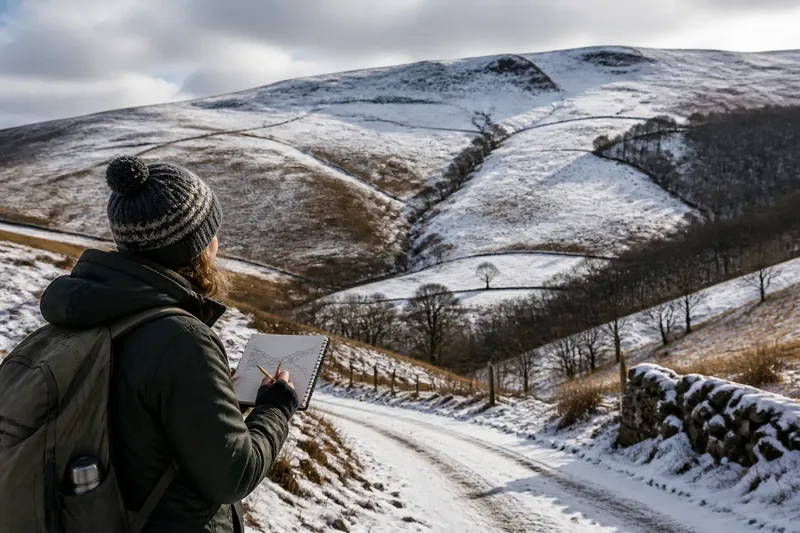
At a bend in a snowy lane, the hillside ahead can look like one smooth shape. Pause, and a notched skyline, a dark crease, and a bare patch begin to stand apart. A winter walk for reading a hillside is an exercise in noticing what is visible and recording what remains uncertain.
Choose a public trail or road with a clear view across a slope, and bring a pocket notebook and pencil. Move from the land’s outline to its surface patterns, then leave time to revisit your questions at home.
Before setting out
Pick a route with more than one view of the hillside, without crossing private land or leaving a marked path. A low viewpoint may reveal the broad profile; a later bend or opening may show another face. If weather or footing feels uncomfortable, keep the walk short and observe from a safe public viewpoint.
A pencil, small notebook, and map or map app are enough for a useful field record. A phone camera can help you remember a view, but it cannot replace a written description. Gloves with usable fingertips and a warm layer can make it easier to stop and take notes.
Before leaving, record visible conditions: cloud cover, recent snow or rain, and whether the ground is frozen, muddy, or bare. Treat these as context, not explanations. A dark strip might be exposed soil, vegetation, shade, or something else; describe it before interpreting it.
Read the skyline
At your first clear viewpoint, trace the hillside’s top edge slowly. Note where it rises, dips, flattens, or breaks into a shoulder, and whether a smaller crest sits in front of the main outline.
Use plain descriptions such as “long rounded crest,” “shallow notch near the left side,” or “short spur drops toward the road.” Avoid naming a cause. A notch might suggest a stream or a pass, but the view alone may not tell you which, if either, fits.
Then look below the skyline. Does the slope stay even, or ease into a bench before dropping again? A quick sketch of the outline and a few slope breaks may be more useful than a paragraph built around uncertain landform names.
Trace visible hollows
Scan downhill for narrow lines and shallow hollows. Bare branches or gathered snow may make some easier to see in winter. Follow each crease with your eyes as far as possible, and note where it fades, meets another hollow, or disappears behind a fold in the land.
Describe the line rather than declaring it a stream. You might write “dark, branching crease below the upper shoulder” or “snow-filled hollow leading toward the road.” A hollow may be dry, hidden by plants, or difficult to distinguish from a track.
Notice how the land’s shape might guide water, without claiming to know its full route. Does a hollow seem to collect into a broader low area? Does a ridge divide two sets of creases? These describe visible form; they do not prove what happens during a storm or spring melt.
Compare slope patterns
Choose two places that look different in exposure, such as an open face and a hollow beside trees. Compare snow cover, vegetation, bare ground, and shadows. Record the contrast before suggesting what might explain it.
Sunlight, wind, ground shape, tree cover, and recent weather may all influence what you see. A single walk rarely separates them. If one slope is bare and another holds snow, write down the difference and each place’s position or direction only if you can identify it confidently.
Notice whether the contrast changes across the hillside. A sheltered-looking patch may sit within open ground, while a shaded strip may continue along a hollow. The pattern’s shape is worth recording even when its cause is unclear.
Questions during the walk?
What should I write down first?
Start with shapes and positions: where a crest dips, where a hollow begins, or which part of a slope holds snow. Keep explanations separate so a later idea does not blur what you actually saw.
Can I tell whether a hollow carries water?
You can record signs that suggest water has passed through, such as a distinct low channel or damp ground. A winter view may not reveal how often it flows, so note the evidence and leave the flow pattern as a question unless you have a reliable basis for saying more.
Why do nearby slopes look different?
Shade, exposure, vegetation, wind, and local shape may all contribute, sometimes at once. Record the specific contrast and its location rather than choosing a cause from appearance alone.
What if snow hides the hillside?
Snow can conceal small channels and surface detail, so focus instead on the skyline, broad slope breaks, and places where snow gathers or thins. Mark obscured areas as unreadable rather than filling them in from expectation.
Keep a clear field record
Before leaving a viewpoint, organize your notes into route or location, conditions, observations, and questions. For example, put “hollow runs from crest toward lower bench” under observations and “seasonal watercourse?” under questions. That separation makes it easier to revisit an idea without mistaking it for something you saw.
Say you stop beside a public trail where a rounded ridge drops toward a shallow, snow-lined crease. You sketch the crest, mark the crease, and note that an open slope is bare while a wooded hollow holds snow. You write “shade or wind?” as a question rather than choosing a cause; the resulting record identifies what a later visit or map comparison could help clarify.
Use a photo only if it helps you remember the view, and take it from a safe place that does not block the path. A note such as “looking across the valley from the trail bend” helps locate it later. Perfect pictures and labels for every mark are not worth the effort if they distract you from observing the hillside.
Check the notes at home
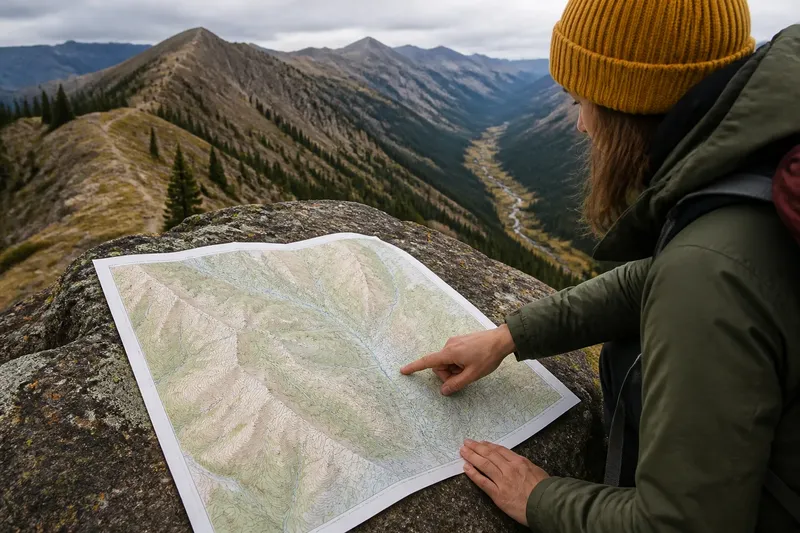
Once indoors, compare your sketch with a topographic map or another map showing contours and terrain. Look for broad agreement between the slope shape you drew and the mapped land. A map may suggest where a ridge or hollow continues beyond your view, but it cannot confirm every surface detail.
Keep questions separate from descriptions. For a route question, consult a detailed local trail map; for a landform term, use a suitable reference. Leave other uncertainties open. Not every observation needs a definitive label.
On a later walk, return to the same viewpoint if access and conditions allow. Similar framing can make changes after a thaw or fresh snow easier to notice, while different weather can alter what the hillside reveals. A winter walk for reading a hillside is most useful when your notebook preserves both the clear observations and the questions that one view cannot answer.